
Communication
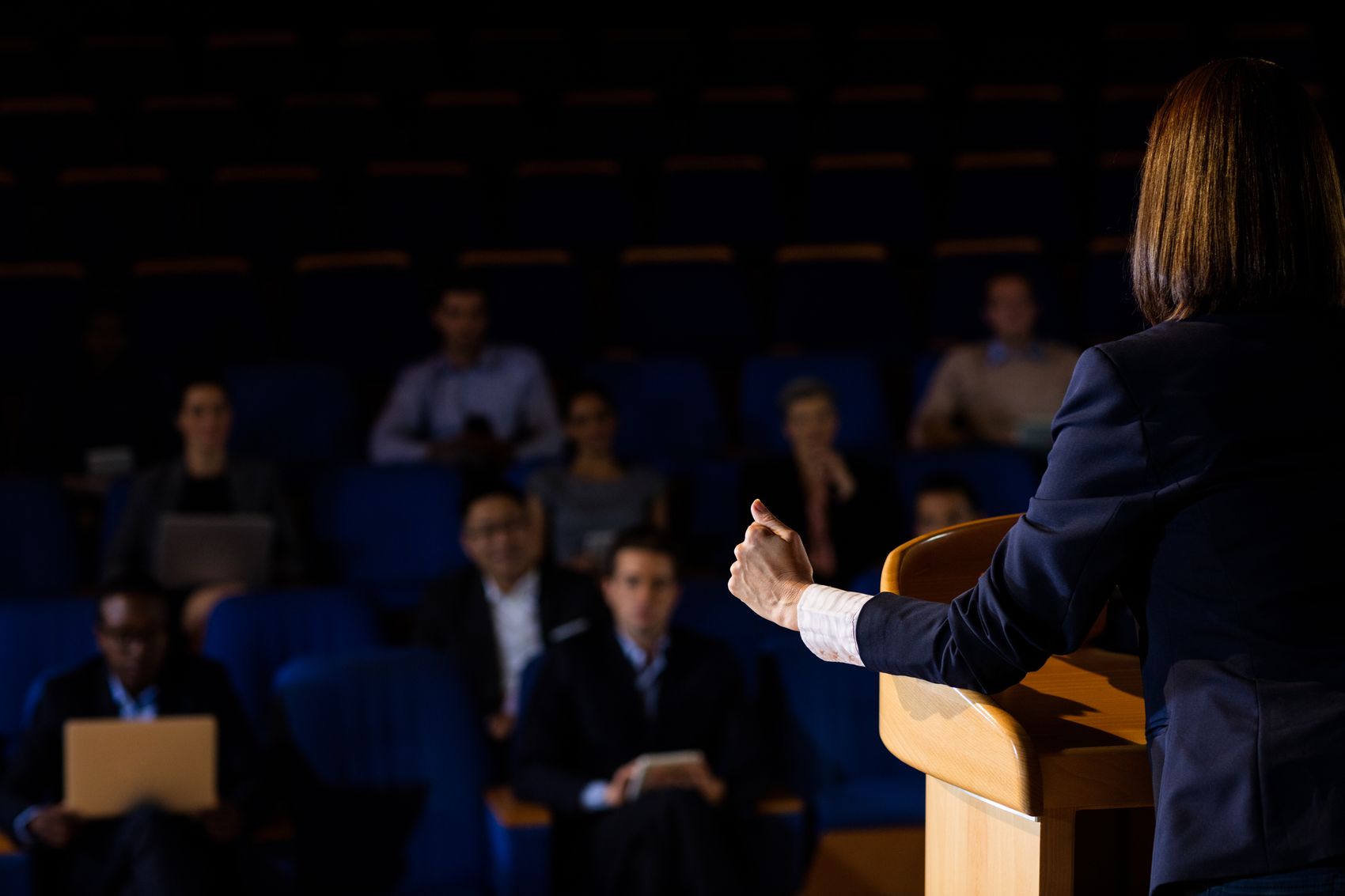
Storytelling in Public Speaking
Structure, story and presence, so the message survives the room and gets repeated afterwards.
The business challenge
Why organizations ask for this.
Well-prepared content fails in delivery. Audiences remember narrative and forget bullet points, yet most professionals are trained only in the bullet points.

Approach & methodology
How the programme actually runs.
2 full days per group + prework and applications · Face-to-face · 80% practice / 20% theory
-
Needs assessment
Pre-workshop sessions to identify the team's specific needs, review of tone and voice, and identification of the real communication instances to build the programme around.
-
Prework
Designed to build interest and awareness, and to create a first immersion into public speaking before anyone stands up.
-
Two-day workshop
Face-to-face, highly interactive, built around repeated public-speaking experiences rather than lecture, 80% practice, 20% theory.
-
Between-session applications
Short reflection homework designed to embed the experience from the previous workshop.
-
Follow-up
Group coaching with video analysis of real presentations.
Competencies built
What participants can do afterwards.
Storytelling
Structure the story so the point survives being retold by somebody else.
Public speaking
Speak to a room without letting the room speak for you.
Persuasion
Build toward the ask, instead of arriving at it by accident.
Confidence
Manage the nerves that would otherwise manage you.
Emotional connection
Give the audience a reason to care before the data arrives.

Expected business outcomes
What the organization should see.
More engaging and memorable presentations
Improved ability to influence audiences
Stronger executive and sales communication impact
Schedule & format
Practical details.
FAQ
Frequently asked questions
Leaders, managers and sales professionals.
2 full days per group + prework and applications. The rhythm is deliberate: modules are spaced so participants apply the behaviour at work between sessions.
Face-to-face · 80% practice / 20% theory. We adapt the mix to your geography and shift patterns.
Yes, and it always is. We start with two to three individual conversations with selected participants, then rebuild the cases, the language and the practice situations from your business.
Kirkpatrick levels one to four: reaction, knowledge, self-assessed behaviour, and the participant's manager assessing the same competencies. We agree the target behaviours with the sponsor before design starts.
Digital missions and buddy work on PROMOTE, with the participant's own manager involved. This is the difference between 15–20% and 60–80% transfer into practice.
Yes. We also deliver in French across our Western European and African operations.
Related programmes
Others in Communication.

PCM: Process Communication Model
A certified model for reading personality in real time. According to PCM, the process of communication (how we say something) is the differentiating factor in whether what we say lands at all.

Feedback
Feedback that is specific, timely and survivable, for both people in the room. Built on SBI and the feedforward mindset.

Relationship Management with DISC
DISC-overing and building balanced relationships, understand your own style, read the other person's, and adapt deliberately.
Start a conversation
Book a strategic discussion about Storytelling in Public Speaking.
If you are evaluating how to build capability that actually changes the way your organization works, we can help you define the right starting point, cohort design and delivery sequence.
The first conversation is diagnostic. We discuss your context, priorities, maturity, and where capability building can create measurable leverage.